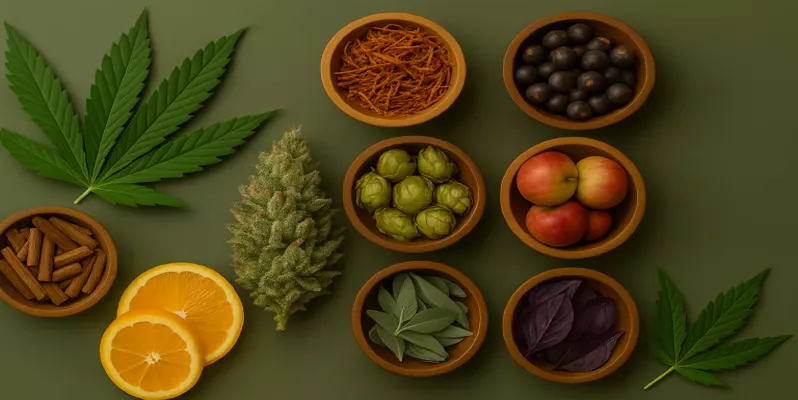
Cannabis is more than THC and CBD. The unique aroma, flavor, and effects of each strain come largely from compounds called terpenes. Found in cannabis and many other plants—like citrus fruits, pine needles, or lavender—terpenes not only deliver fragrance but also influence how cannabinoids feel in the body. This interaction is known as the entourage effect, where cannabinoids and terpenes work together to create distinct experiences.
What Are Terpenes?
Terpenes are organic compounds that give cannabis its signature aroma—citrus, pine, floral, earthy, or spicy. But they also play a role in mood, relaxation, focus, or physical relief, depending on the type and concentration.
Research suggests terpenes may offer properties such as anti-inflammatory, analgesic, or calming effects. While studies are ongoing, what’s clear is that terpenes make every cannabis product unique. To see how Jersey Canna incorporates terpene-rich formulas, visit our About Jersey Canna page.
12 Common Cannabis Terpenes and Their Benefits
Here are some of the most common terpenes in cannabis and their potential effects:
- Bisabolol – Floral, mild aroma. Found in chamomile. Linked to relaxation and anti-inflammatory benefits.
- Nerolidol – Floral, citrus notes. Found in jasmine and lemongrass. May support anxiety relief and pain reduction.
- Linalool – Lavender and fresh spice aroma. Known for calm and sleep support. Found in lavender.
- Myrcene – Earthy, pungent. Found in hops and thyme. Often associated with muscle relaxation.
- Caryophyllene – Spicy, peppery, woody. Found in black pepper and cinnamon. Unique terpene that interacts with CB2 receptors and supports anti-inflammatory effects.
- Terpineol – Citrus and herbal aroma. Found in lilac and pine oil. May reduce pain and offer antiviral support.
- Eucalyptol – Minty and cooling. Found in eucalyptus and sage. Associated with bronchodilation and physical relief.
- Terpinolene – Pine and herbal notes. Found in apples and cumin. Adds uplifting and analgesic potential.
- Limonene – Bright citrus aroma. Found in citrus fruits. Supports mood, energy, and stress relief.
- Pinene (A/B) – Pine and earthy. Found in pine needles and rosemary. Linked to memory support and anti-inflammatory effects.
- Ocimene – Herbal and woody. Found in basil, mint, and orchids. May provide antifungal and anti-inflammatory benefits.
- Humulene – Woody and earthy. Found in hops and basil. Known for appetite suppression and inflammation support.
Why Terpenes Matter in Cannabis
Two strains with the same THC percentage can feel completely different—and terpenes are the reason. For example:
- Linalool and Myrcene tend to promote relaxation, making them suitable for evening use.
- Limonene and Pinene feel more energizing, perfect for daytime activities.
Studies from the National Center for Complementary and Integrative Health suggest that when consumed together, terpenes and cannabinoids can shape the duration and intensity of effects.
How to Choose the Right Ones
When exploring cannabis, don’t just look at THC or CBD—review the terpene profile as well.
- For calm and sleep: choose strains high in linalool, bisabolol, or myrcene.
- For energy and focus: look for limonene, pinene, or terpinolene.
- For inflammation or discomfort: caryophyllene, humulene, or eucalyptol are common.
At Jersey Canna, every product is small-batch crafted with transparency, ensuring terpene and cannabinoid profiles are clear so you can make informed choices.
Conclusion
Terpenes are the aromatic fingerprint of cannabis. They do more than smell pleasant—they shape the way cannabis feels, from uplifting daytime energy to soothing nighttime calm. Understanding terpenes empowers you to match products with your personal goals, whether that’s relaxation, focus, or overall wellness.
As cannabis education grows, terpenes will continue to play a central role in how consumers explore products with confidence and intention.