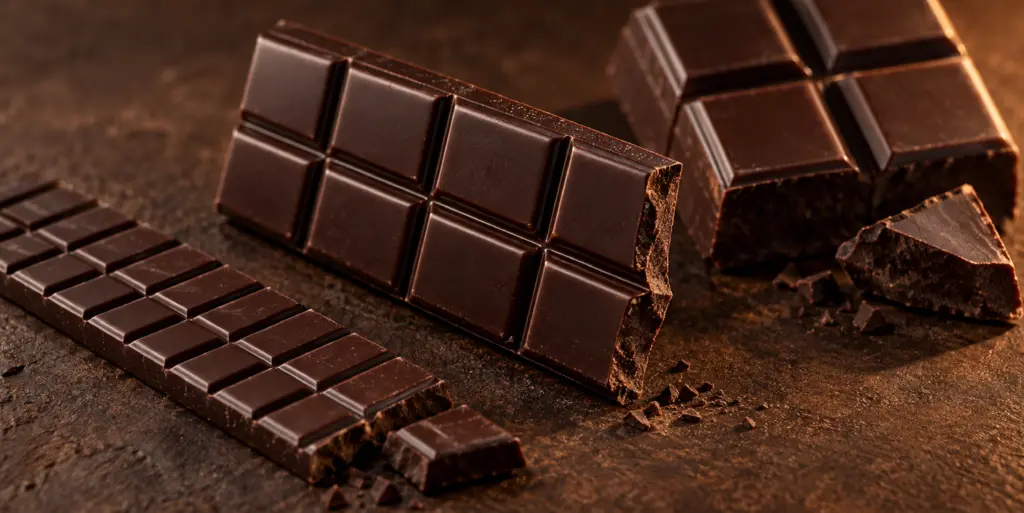
A THC chocolate bar is more than chocolate infused with a measured amount of cannabis. The size of each section, number of segments, shape of the bar, total package potency, and chocolate format all influence how consumers understand and interact with the finished edible.
This makes physical design an important part of cannabis product development.
At Jersey Canna, cannabis chocolate appears in several formats, ranging from traditional segmented Cannabars™ to microdose-focused products and specialty shapes. Those differences show how the architecture of an edible can change without simply increasing potency.
Why THC Chocolate Bar Design Matters
Chocolate bars naturally lend themselves to portioning. Lines, sections, and break points can transform one larger confection into several clearly defined pieces.
With cannabis chocolate, those divisions carry additional importance because they can correspond to labeled THC servings.
New Jersey regulations limit a single serving of a solid ingestible cannabis product to no more than 10mg of active THC. The state’s rules also require the cannabinoid concentration of each serving to remain within a specified range of the amount stated on the label.
This means segmentation is not merely decorative. It can become part of how the manufacturer communicates serving information.
A well-designed bar helps answer three questions quickly:
How much THC is in the package?
How much THC is associated with each section?
How is the chocolate physically divided?
Those details create a clearer relationship between the product and its label.
A Classic 10mg Segmented THC Chocolate Bar
One common design uses 10 sections containing 10mg THC each.
The Jersey Dark Cannabar™ follows this structure. The Belgian dark chocolate bar contains 100mg THC per package and 10mg THC in each segment.
Jersey Canna’s Milk Chocolate Cannabars™ use a similar architecture with Belgian milk chocolate: 10mg THC per section and 100mg total.
This format is straightforward because the visual architecture mirrors the serving architecture.
One section represents one labeled 10mg portion.
The design therefore does part of the communication work before the consumer even takes a bite.
Smaller Segments Create a Different Product
Not every THC chocolate bar needs to follow a 10-piece structure.
A manufacturer can use more sections to create smaller portions while keeping the total package potency within the same overall range.
The 21 Counties Bar™ demonstrates this idea in a different way. Its New Jersey-shaped Belgian milk chocolate format contains 21 segments with approximately 4.75mg THC each and 100mg total per package.
That changes the physical interaction with the product.
Instead of ten larger sections, the consumer sees more individual pieces with less THC assigned to each one. The total package remains similar to many other bars, but its internal architecture is completely different.
This is why total THC alone cannot explain how a chocolate edible is designed.
Serving Size Is Different From Package Potency
A THC chocolate bar may display 100mg prominently on its packaging, but that number typically describes the entire package rather than one serving.
The individual portion tells a different story.
Consider these Jersey Canna formats:
| Product Format | THC Per Section | Package Structure |
| Jersey Dark Cannabar™ | 10mg | 10 segments / 100mg |
| Milk Chocolate Cannabars™ | 10mg | Segmented 100mg bar |
| 21 Counties Bar™ | Approx. 4.75mg | 21 segments / 100mg |
| CannaJolt Energy Bar™ | 5mg | 20 pieces / 100mg |
The company’s current microdose collection shows how smaller pieces can coexist with more traditional cannabis chocolate formats.
This creates meaningful product differentiation without making potency the only design variable.
Shape Can Communicate the Product Concept
Serving architecture is not limited to straight lines on a rectangular bar.
Shape can also become part of the product identity.
The 21 Counties Bar uses the shape and segmentation of New Jersey as part of its design. Jersey Canna also produces cubes, discs, truffles, pretzel bites, and specialty chocolate formats across its Bars & Bites collection.
From a product-development perspective, these formats create different possibilities for portioning.
A cube is naturally presented as an individual piece. A segmented bar requires clear break points. A multi-piece package can organize the total THC across several standalone chocolates.
The ideal structure depends on what the product is designed to communicate.
Chocolate Format Also Shapes the Experience
Design does not stop at cannabinoid serving size.
The type of chocolate and physical construction influence texture, snap, melting behavior, flavor intensity, and how easily the product can be divided.
A thin segmented dark chocolate bar behaves differently from a thicker milk chocolate piece. A filled confection introduces another structural challenge because the shell and filling need to work together. Specialty inclusions such as graham crackers, marshmallows, coffee, or nuts can change the physical product further.
This is where cannabis edible manufacturing meets traditional confectionery design.
The final product needs to function as both a regulated edible and a well-made piece of chocolate.
Clear Segmentation Supports Informed Consumption
Physical divisions do not replace responsible-use guidance.
Adults still need to read the complete package and understand the labeled THC amount before consuming any cannabis edible.
The NJ Cannabis Regulatory Commission’s responsible consumption guidance recommends starting with a low amount of THC and waiting for the full effects before consuming more.
That waiting period matters because edibles behave differently from inhaled cannabis. The CDC notes that edible effects can take approximately 30 minutes to two hours to appear and can last longer than consumers expect.
A clearly segmented bar can make the labeled portion easier to identify. It cannot determine how quickly or strongly an individual will respond.
The Future of THC Chocolate Bar Design Is About Flexibility
Cannabis chocolate design does not need to move toward larger servings or greater potency to become more innovative.
Product development can instead focus on better portion architecture, smaller segments, distinctive shapes, specialty chocolate constructions, and clearer connections between the physical product and its labeled servings.
That gives manufacturers more ways to differentiate products while giving adults more information about what each section represents.
For Jersey Canna, the contrast between classic 10mg Cannabar™ sections, approximately 4.75mg segments in the 21 Counties Bar™, and 5mg formats in its microdose collection demonstrates how much variety can exist inside a single category.
A thoughtfully designed THC chocolate bar therefore communicates more than flavor or total potency. Its shape, sections, serving size, and chocolate construction all become part of the product.
Explore Jersey Canna and its cannabis chocolate Bars & Bites collection to see how different serving structures and chocolate formats are used across its New Jersey edible lineup.