
Cannabis chocolate can look simple from the outside: chocolate, cannabinoids, and a defined amount of THC. Behind that finished product, however, is a much more complex formulation process.
Cannabinoid ratios, extract selection, chocolate type, serving size, and physical format can all distinguish one edible from another. This means two chocolates with similar THC totals may still represent very different product designs.
At Jersey Canna, the category includes traditional THC chocolates, THC-and-CBD combinations, live rosin products, functional formulations, cubes, discs, bars, and products designed for smaller portions.
Understanding these variables provides a better way to evaluate cannabis chocolate than looking at potency alone.
Cannabis Chocolate Starts With the Cannabinoid Formula
One of the first decisions in edible formulation is determining which cannabinoids will be included and in what amounts.
THC is the primary intoxicating cannabinoid in cannabis. CBD is another major cannabinoid, but it does not produce the same intoxicating effect. Cannabis formulations can also incorporate other cannabinoids depending on the intended product design.
This creates several possibilities.
A chocolate may contain primarily THC. Another may combine THC and CBD. Functional products may incorporate additional cannabinoids alongside other ingredients.
The ratio therefore becomes part of the product’s identity.
However, cannabinoid ratios should not be treated as a guarantee of a specific effect. Individual responses can vary based on dose, tolerance, metabolism, prior cannabis use, and other factors.
A Real Example: THC + CBD Chocolate
Jersey Canna’s Canna Discs Caramel Flavored™ provide an example of ratio-based formulation.
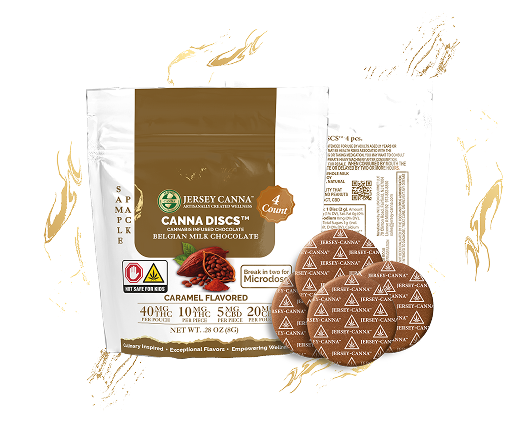
Each disc contains:
- 10mg THC
- 5mg CBD
- Belgian milk chocolate
- Caramel flavor
That creates a 2:1 THC-to-CBD formulation rather than a THC-only chocolate.
The important point is not that one ratio is automatically better. Instead, cannabinoid composition gives consumers another piece of information when comparing products.
Extract Type Adds Another Layer to Cannabis Chocolate
After cannabinoid composition comes another major formulation decision: the cannabis extract itself.
Different products can use refined cannabis extracts, cannabis oils, live resin, or solventless live rosin. These ingredients differ in how they are processed and in the chemical profiles they bring into a finished edible.
That is why extract quality deserves attention.
Research on cannabinoid extraction has shown that extraction conditions can influence the concentration and composition of cannabinoids recovered from cannabis material.
For chocolate manufacturers, the challenge does not end with producing an extract. The cannabis ingredient must then be incorporated into a food matrix while maintaining flavor, texture, potency, and serving consistency.
Live Rosin as a Premium Formulation Choice
Jersey Canna’s Live Rosin Cannabar™ – Sativa illustrates this approach.
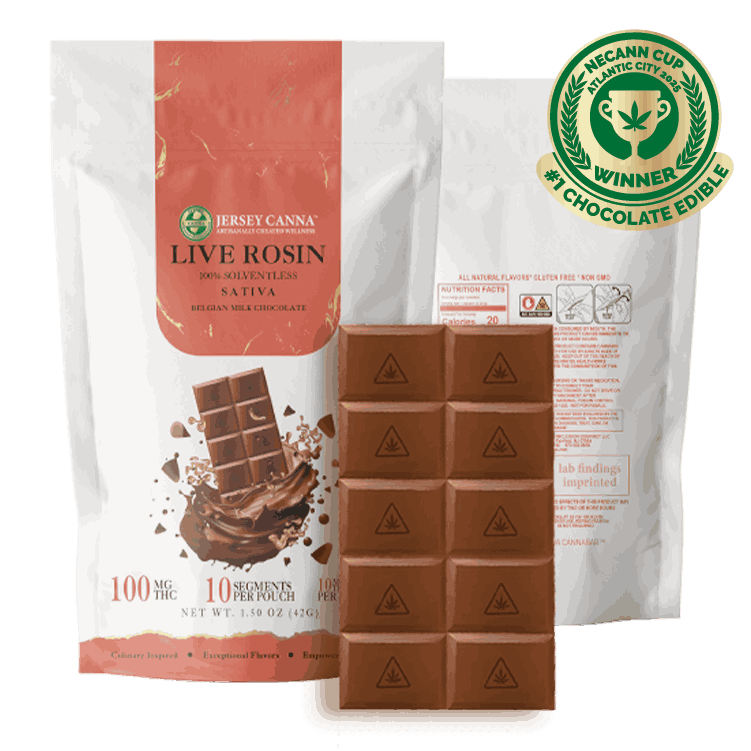
The product combines Belgian milk chocolate with solventless live rosin and provides 10mg THC per segment, with 100mg THC per package.
This formulation differs from a traditional cannabis chocolate made with a more refined extract.
The distinction gives consumers another way to understand what they are purchasing beyond the THC number printed on the package.
Format Is Part of the Cannabis Chocolate Formula
Formulation also includes the physical architecture of the edible.
A manufacturer can deliver cannabinoids through:
- Segmented chocolate bars
- Individual cubes
- Discs
- Truffles
- Small breakable pieces
- Functional chocolate formats
These choices influence how the product is portioned and how clearly consumers can identify individual servings.
Consider two Jersey Canna products.
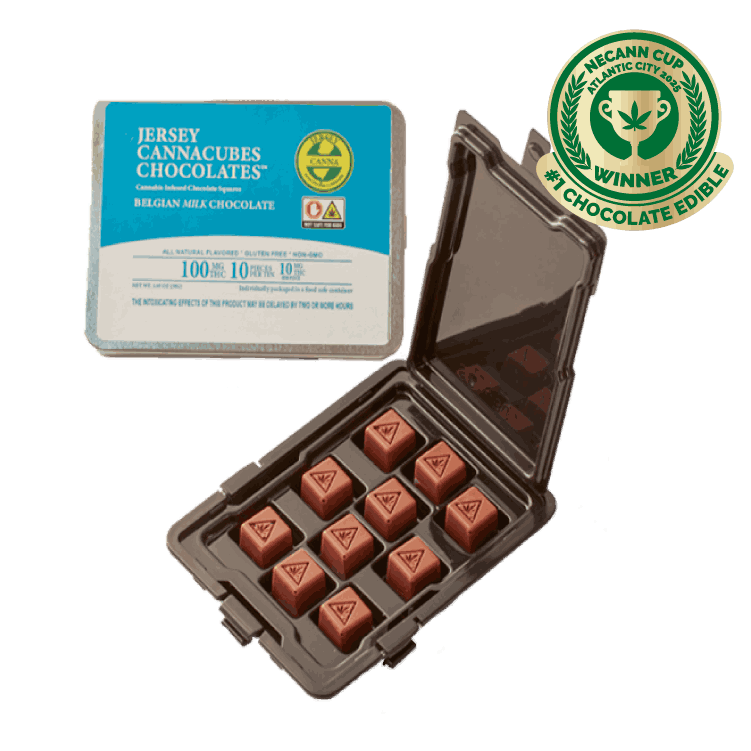
The Milk Chocolate Cannacubes™ contain 10mg THC per cube, with 10 cubes and 100mg THC total in the package.
The Jersey Micro Bar™ uses a different structure. It contains 20 segments with 5mg THC each, and those segments can be divided into smaller 2.5mg portions.
Both products are cannabis chocolate. Their serving architecture, however, creates distinctly different formats.
Comparing Cannabis Chocolate Formulation Variables
| Formulation Variable | What Can Change | Example |
| Cannabinoid Ratio | THC-only vs. THC + CBD combinations | Canna Discs |
| Extract | Standard extract, cannabis oil, live resin, live rosin | Live Rosin Cannabar™ |
| Serving Size | 10mg, 5mg, or smaller divisible portions | Jersey Micro Bar™ |
| Physical Format | Bar, cube, disc, truffle, segmented piece | Milk Chocolate Cannacubes™ |
| Chocolate Base | Milk chocolate, dark chocolate, flavored formulations | Jersey Canna collection |
| Functional Ingredients | Cannabinoids combined with other selected ingredients | CannaJolt™ and functional lines |
Together, these variables show why cannabis chocolate should be understood as a formulated product rather than simply chocolate containing THC.
Why Serving Consistency Matters
Once cannabinoids are incorporated into chocolate, consistent distribution becomes important.
Edibles are complex food matrices. Scientific reviews of cannabinoid testing note that analyzing cannabinoids in oils, foods, and other edible matrices can require different analytical approaches because finished products vary substantially in composition.
For consumers, this reinforces the importance of clearly labeled and regulated products.
New Jersey requires legal cannabis products to display THC information. Current NJ-CRC guidance states that ingestible cannabis products sold legally in the state have a maximum of 100mg THC per package, with individual servings generally limited to 10mg THC.
This regulatory framework makes portion design more than an aesthetic choice.
It becomes part of how the product communicates potency.
Formulation Does Not Eliminate the Need for Responsible Use
Even a carefully segmented cannabis chocolate can affect different people differently.
The NJ Cannabis Regulatory Commission’s safe consumption guidance recommends beginning with a low dose and waiting for the full effects before consuming more. Edibles can take one or two hours to produce noticeable effects and may last longer than inhaled cannabis.
The CDC also notes that edible cannabis can have delayed effects, which can increase the risk of consuming more than intended.
Adults should always read the label, understand the amount of THC per serving, store cannabis securely away from children and pets, and avoid driving after consumption.
Cannabis Chocolate Is Moving Beyond a Single Formula
The modern cannabis chocolate category demonstrates how much product development can happen inside one edible format.
A manufacturer can change the cannabinoid ratio. It can select a different extract. It can alter the chocolate base, serving structure, flavor, or functional ingredients.
Each decision changes the final formulation.
That is why comparing cannabis chocolate only by total THC misses much of the story.
A more informed comparison looks at what cannabinoids are present, what type of extract is used, how each serving is structured, and how the complete product is formulated.
Explore Jersey Canna and its cannabis edibles collection to discover how different cannabinoid profiles, extracts, chocolate styles, and formats come together across its New Jersey cannabis chocolate lineup.