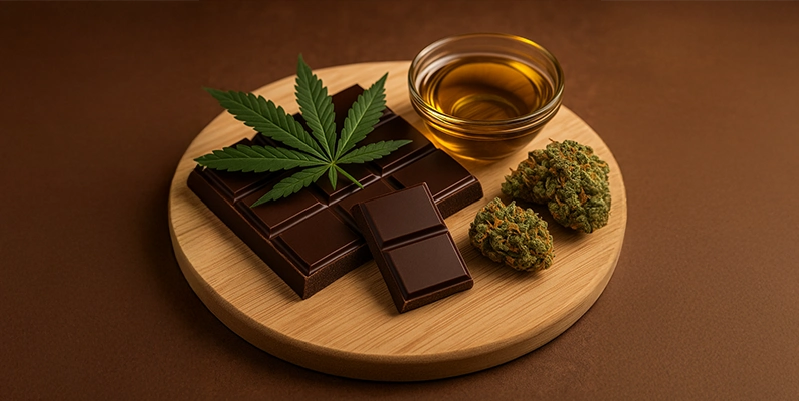
Cannabis chocolate effects go far beyond indulgence. Behind the creamy texture and rich taste, there’s a fascinating interaction happening between cannabinoids like THC or CBD and the fats in chocolate. This combination affects how your body absorbs and responds to cannabis edibles.
When compared to smoking or vaping, chocolate edibles take longer to kick in but often result in deeper and longer-lasting effects. That’s not by chance—it’s basic pharmacokinetics, the science of how substances move through the body.
Let’s break down how cannabis chocolate works, why fat content plays a major role, and how to use it wisely.
What Happens When You Eat Cannabis Chocolate?
When you consume a cannabis chocolate bar, the cannabinoids are digested, metabolized, and eventually absorbed into your bloodstream. This is a very different route than inhalation, which sends cannabinoids straight to your lungs and quickly into the blood.
With edibles, cannabinoids must pass through the stomach and small intestine before hitting the liver, where THC is converted into 11-hydroxy-THC—a more potent and longer-lasting compound. This conversion explains why eating cannabis sometimes leads to a stronger “body high” than smoking, even if the THC dose is the same.
It’s also why many people report feeling the effects for up to 6–8 hours after consuming cannabis chocolate.
Why Chocolate Makes a Difference
Here’s where it gets interesting: cannabinoids like THC and CBD are fat-soluble. That means they don’t dissolve well in water (like your bloodstream), but they do bind easily with fat molecules. This is where chocolate becomes the perfect delivery system.
Chocolate—especially high-quality dark or milk chocolate—contains fats like cocoa butter, which act as natural carriers for cannabinoids. These fats help the body absorb more THC or CBD through the digestive lining and into the bloodstream.
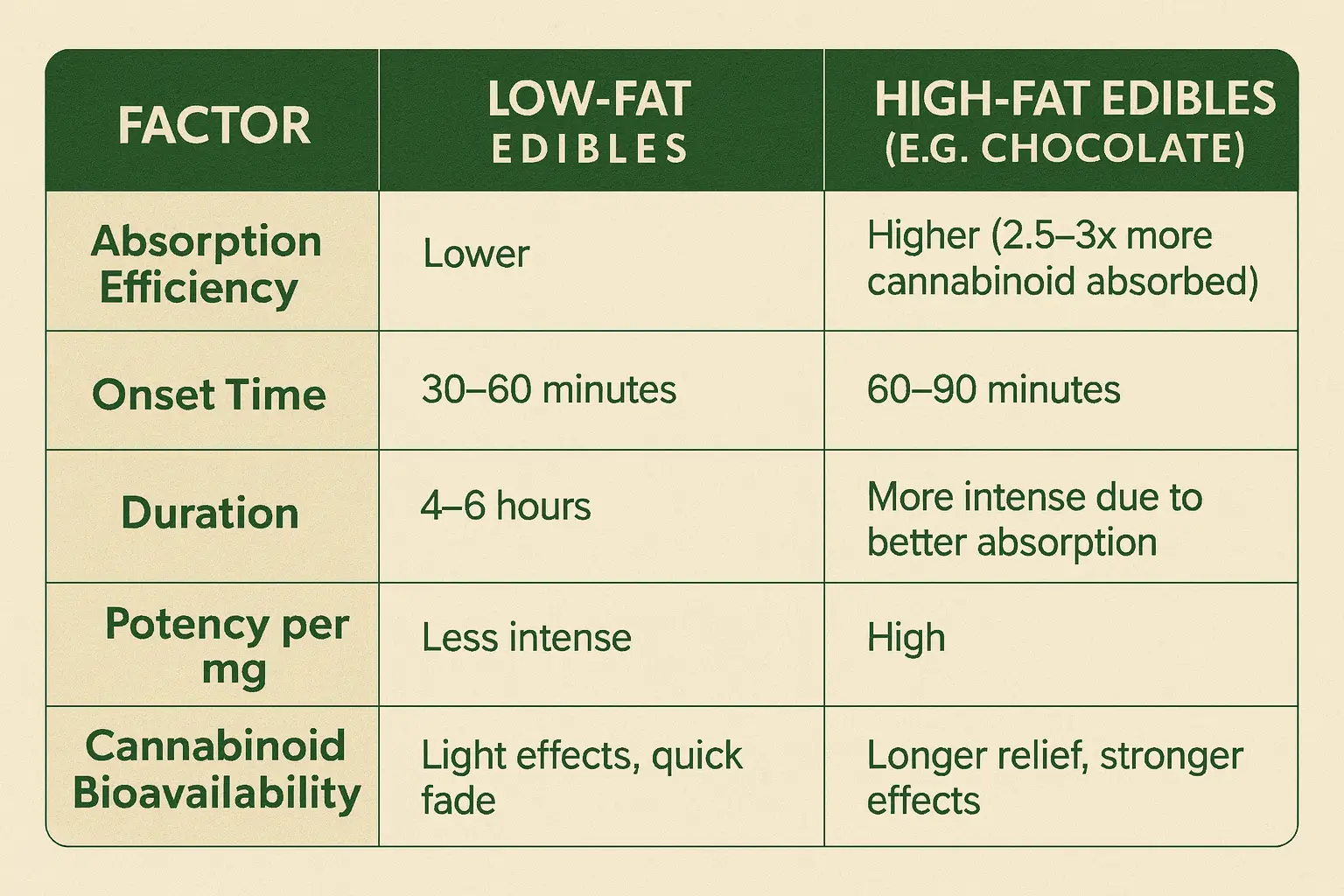
According to a study published on PubMed, the presence of dietary fats can increase cannabinoid absorption by 2.5 to 3 times. That means a chocolate edible with 10 mg of THC may deliver a stronger effect than a low-fat gummy with the same dose.
Fat Improves Bioavailability
“Bioavailability” refers to the percentage of a substance that actually makes it into your circulation and can have an active effect. Cannabinoids taken orally often have low bioavailability—but pairing them with fats significantly increases it.
In one clinical study, subjects who took CBD with a high-fat meal showed up to 4–5 times greater absorption compared to taking it on an empty stomach. This finding is also highlighted by Project CBD, which explains how fats help cannabinoids avoid liver breakdown and get into the bloodstream via the lymphatic system.
So yes, chocolate doesn’t just make cannabis taste better—it makes it work better too.
Table: High-Fat vs Low-Fat Cannabis Edibles
Internal vs External Links: Science & Resources
Chocolate’s role in enhancing cannabis edible pharmacokinetics is more than theory. Studies available through PubMed confirm the improved cannabinoid delivery via dietary fats, while Project CBD expands on how this affects user experience, particularly with CBD.
For more wellness-oriented content, safe usage guides, and premium chocolate edibles, the official site of Jersey Canna offers educational resources that explain how their formulations are aligned with this absorption science.
Tips to Maximize Cannabis Chocolate Effects
If you’re ready to try cannabis chocolate or want to optimize your experience, here are some simple but science-backed recommendations:
- Start with a low dose (2.5–5 mg THC), especially if you’re new to edibles or sensitive to THC.
- Avoid taking it on an empty stomach. A small meal with some fat (like avocado or peanut butter) will enhance absorption.
- Wait at least 90 minutes before deciding to take more. Onset is slower than smoking, but the effects are longer and stronger.
- Stay hydrated, and choose a comfortable setting, especially if you’re exploring higher doses.
- Be consistent: To get predictable results, try to consume under similar conditions each time (similar meals, times, and product types).
Final Thoughts
Cannabis chocolate isn’t just a tasty treat—it’s a smart delivery method. Thanks to the presence of fats, chocolate enhances cannabinoid absorption, leading to more potent and longer-lasting effects than many other edible forms.
Understanding how fats and cannabinoids interact empowers you to use cannabis chocolate more safely and effectively. Whether you’re exploring it for wellness, relaxation, or gentle relief, knowing how it works in your body makes all the difference.For quality chocolate edibles and expert insight, visit Jersey Canna—where flavor meets function in every bite.