

Weed chocolate is no longer defined simply by combining THC with a chocolate bar. Modern cannabis edibles can use different extracts, cannabinoid profiles, and production methods that influence how the final product is formulated, flavored, and positioned.
For a chocolate-focused manufacturer, the extract matters just as much as the cocoa, texture, and serving format. Jersey Canna demonstrates this through a collection that includes chocolates made with live resin, solventless live rosin, and other cannabis extracts.
Understanding these differences can help adult consumers look beyond THC percentage when comparing cannabis chocolate.
Why Extract Quality Matters in Weed Chocolate
Cannabis contains numerous chemical compounds, including cannabinoids and aromatic compounds. The way plant material is processed can influence which compounds remain in an extract and in what concentrations.
Research comparing cannabis extraction protocols has found that processing methods can produce meaningful differences in the chemical profiles of resulting extracts. This makes extraction an important part of product formulation rather than simply a step used to obtain THC. Consumers interested in the science can explore this peer-reviewed research on cannabis extraction protocols.
For chocolate makers, that extract must then work within another complex ingredient: chocolate itself.
Flavor, aroma, cannabinoid concentration, texture, and consistency all need to be considered when building the final edible.
How Live Resin Changes Weed Chocolate
Live resin offers one approach to developing a more cannabis-forward edible.
Rather than treating the cannabis component as something that simply adds THC, manufacturers can use extract choice as part of the product’s flavor and formulation strategy.
A good example is Jersey Canna’s S’mores Cannabar™. The bar combines Belgian milk chocolate, graham cracker pieces, mini marshmallows, and live resin cannabis oil. Each of its 10 segments contains 10mg THC, for 100mg THC per package.
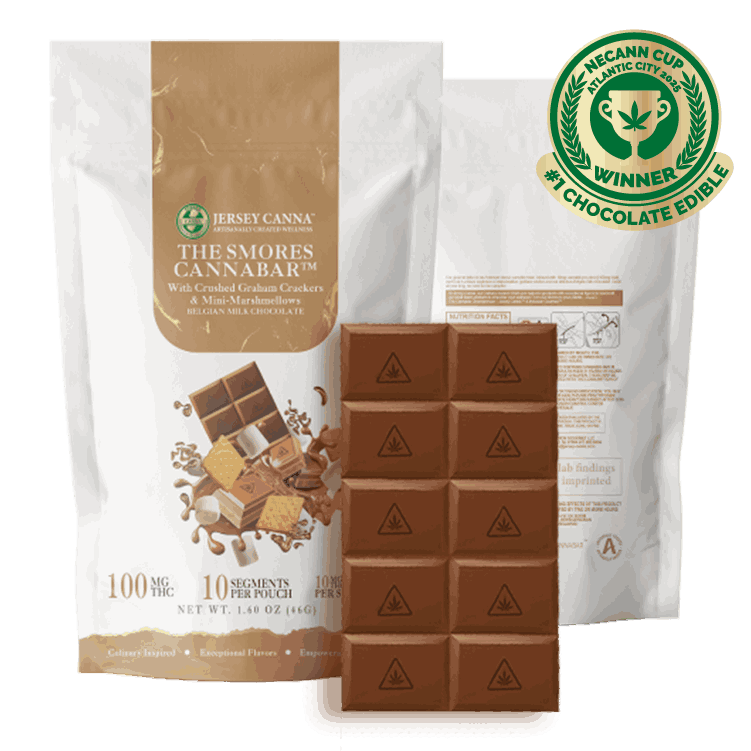
That formulation shows why extract selection and culinary design need to work together. The cannabis component exists alongside several distinctive flavors rather than being added to a neutral confection.
Live Rosin: A Solventless Approach to Cannabis Chocolate
Live rosin represents a different production philosophy.
Rosin concentrates are produced mechanically using heat and pressure rather than conventional extraction solvents. Research discussing rosin production describes it as a solventless method for creating cannabis concentrates.
Jersey Canna applies this approach to its Live Rosin Cannabar™ collection.
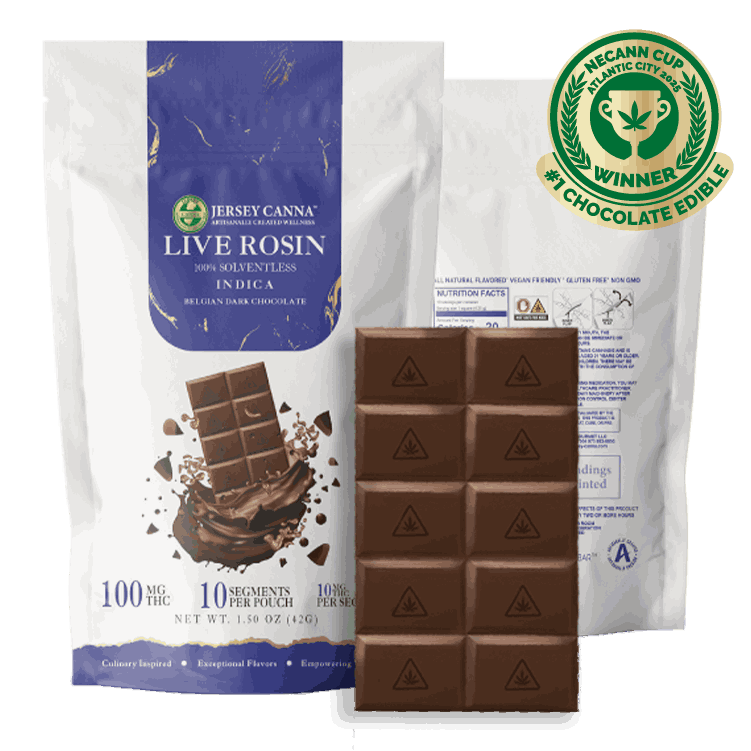
The Live Rosin Cannabar™ – Indica combines Belgian milk chocolate with solventless live rosin. The bar provides 10mg THC per section and 100mg per package.
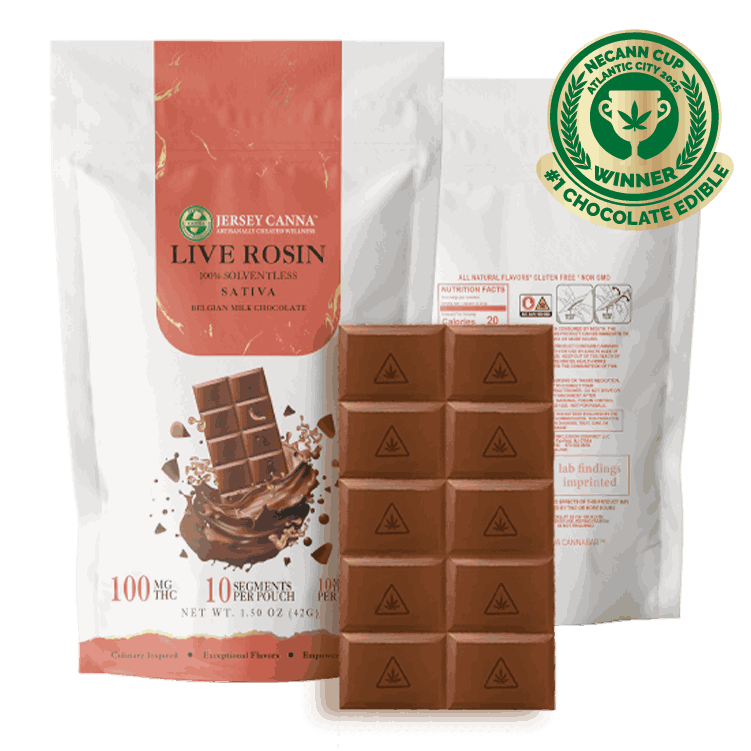
The Live Rosin Cannabar™ – Sativa uses the same segmented 100mg format with a sativa-oriented live rosin formulation.
For consumers comparing premium weed chocolate, the important difference is not simply the words “Indica” or “Sativa.” The extraction method, chocolate base, formulation, cannabinoid concentration, and portion structure all deserve attention.
Live Resin, Live Rosin, and Cannabis Extract: What Changes?
The differences become clearer when the products are viewed from a formulation perspective.
| Extract Approach | Key Product Consideration | Jersey Canna Example |
| Live Resin Cannabis Oil | Allows cannabis extract to become part of a flavor-driven confection | S’mores Cannabar™ |
| Solventless Live Rosin | Uses a mechanically produced cannabis concentrate | Live Rosin Cannabar™ |
| Premium Cannabis Extract | Provides a more classic infused chocolate format | Jersey Dark Cannabar™ |
Jersey Canna’s Jersey Dark Cannabar™, for example, uses premium cannabis extract with Belgian dark chocolate. It contains 10mg THC per segment and 100mg THC per package.
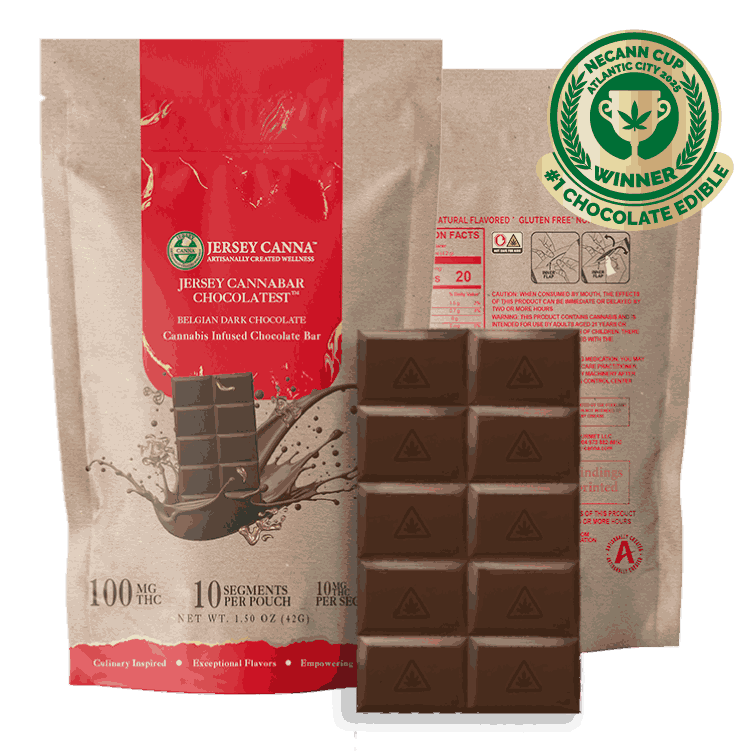
This creates a useful contrast. Two bars can contain the same total amount of THC while being built with different chocolate bases and cannabis ingredients.
Potency alone does not describe the entire product.
Weed Chocolate Is Also a Culinary Formulation
Premium cannabis chocolate sits at the intersection of cannabis processing and food production.
Chocolate has its own fat structure, melting behavior, sweetness, cocoa intensity, and aroma. Adding a cannabis extract introduces another ingredient that must be distributed consistently throughout the edible.
This is one reason the manufacturing process matters.
A successful formulation needs to consider:
- Extract selection
- Cannabinoid concentration
- Chocolate type
- Flavor compatibility
- Portion size
- Distribution across individual servings
- Product consistency
Jersey Canna’s portfolio uses Belgian milk and dark chocolate across multiple formats, including Cannabars™, cubes, functional products, and live rosin chocolates.
Consistent Portions Still Matter
Regardless of which extract is used, consumers should pay attention to the amount of THC contained in each serving.
New Jersey’s guidance for ingestible cannabis products states that an individual serving can contain no more than 10mg of active THC, with a lower limit applying to beverage servings. The state’s rules emphasize controlled serving sizes, labeling, testing, and responsible manufacturing. Readers can review the NJ Cannabis Regulatory Commission guidance for ingestible cannabis products for additional information.
Adults should always read the package before consuming an edible. Someone’s previous experience with one chocolate product does not automatically predict how they will respond to another.
Looking Beyond THC When Choosing Weed Chocolate
The next time an adult consumer compares weed chocolate, THC concentration should be only one part of the evaluation.
The extract can provide additional information about how the product was developed. Live resin, solventless live rosin, and other cannabis extracts represent different formulation choices. Chocolate type, portioning, ingredients, and manufacturing quality add further layers.
This is where cannabis chocolate is becoming more sophisticated. The category is moving beyond simply asking, “How many milligrams does it contain?”
A better question is: What went into creating those milligrams as a complete edible?
Explore Jersey Canna to discover its cannabis chocolate collection and compare different flavors, formats, extracts, and formulations available for adults 21 and older in New Jersey.