

Weed edibles are becoming much more diverse than products defined only by THC potency. Today, edible formulation can involve multiple cannabinoids, different serving sizes, culinary ingredients, extracts, and functional components designed around specific product concepts.
That evolution is visible across the collection from Jersey Canna. Alongside traditional cannabis chocolates, the brand offers microdose formats and functional formulations that combine THC with cannabinoids such as CBD and CBG, as well as other selected ingredients.
For consumers, this means understanding an edible increasingly requires looking beyond one number on the package.
Why Weed Edibles Are Moving Beyond THC
THC remains an important part of cannabis product formulation. However, it is only one of the cannabinoids found in cannabis.
Products can also incorporate CBD and minor cannabinoids such as CBG. The combination and amount of these cannabinoids can vary significantly between formulations.
This does not mean a particular combination guarantees a specific experience. Cannabis can affect people differently, and factors such as serving size, tolerance, metabolism, and prior use matter.
Instead, cannabinoid combinations should be viewed as part of the product architecture.
A THC-only chocolate and a THC + CBD chocolate may belong to the same broad edible category, yet their formulas are clearly different.
Jersey Canna demonstrates this distinction with products that use different cannabinoid profiles across its functional and specialty collections.
How Weed Edibles Use Cannabinoid Combinations
One way manufacturers differentiate modern edibles is through cannabinoid ratios.
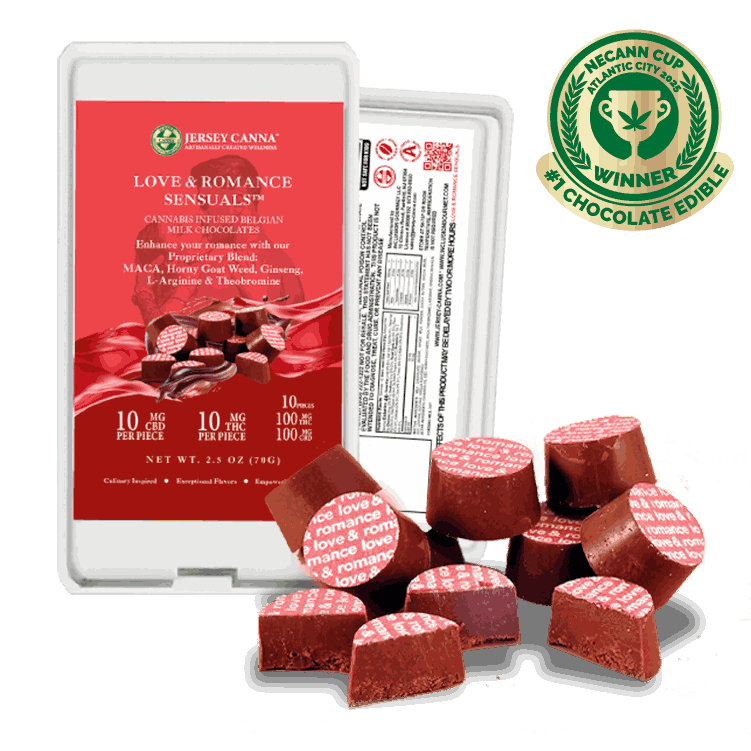
For example, Jersey Canna’s Love & Romance Sensuals™ contains 100mg THC and 100mg CBD per package. Each of its 10 pieces contains 10mg THC and 10mg CBD.
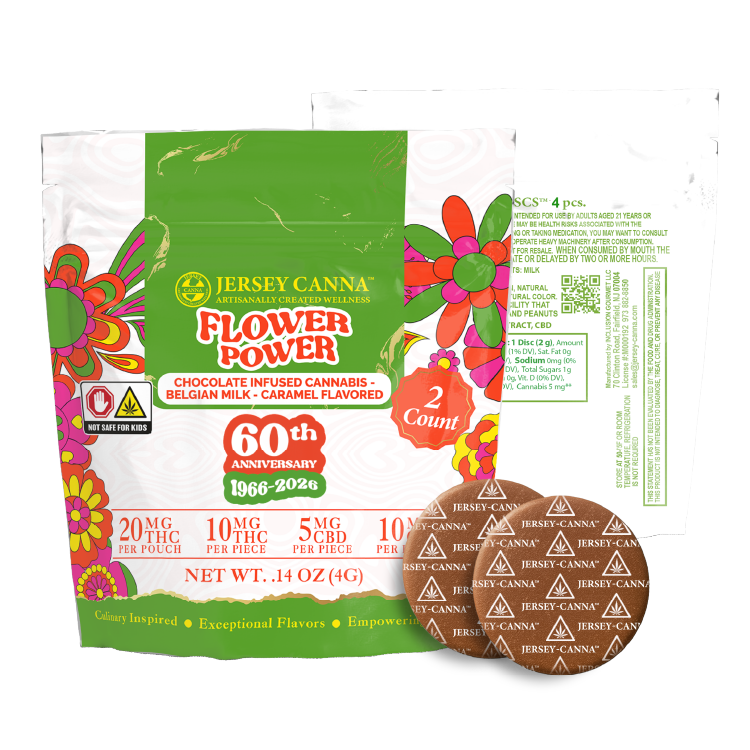
The Flower Power CannaDiscs™ provide another example. Jersey Canna describes them as using a balanced THC + CBD formulation combined with Belgian milk chocolate and caramel flavor.
These products demonstrate how cannabinoid composition can become part of an edible’s identity.
Rather than asking only, “How much THC does this contain?” consumers can also consider:
- Which cannabinoids are included?
- How much is contained in each serving?
- What is the cannabinoid ratio?
- What other ingredients are part of the formulation?
- How is the product portioned?
Those questions provide a more complete picture of the edible.
Functional Ingredients Are Creating New Edible Categories
Another major development is the rise of functional cannabis edibles.
In this context, “functional” describes products formulated around a particular concept or occasion and containing additional selected ingredients. It should not be interpreted as a guarantee of medical, therapeutic, or wellness results.
Jersey Canna has a dedicated functional edibles collection that demonstrates how broad this category can become.
One example is The CannaJolt Energy Bar™. Each piece contains 5mg THC, while the formula also includes CBG, Vitamin B12, and other proprietary ingredients.
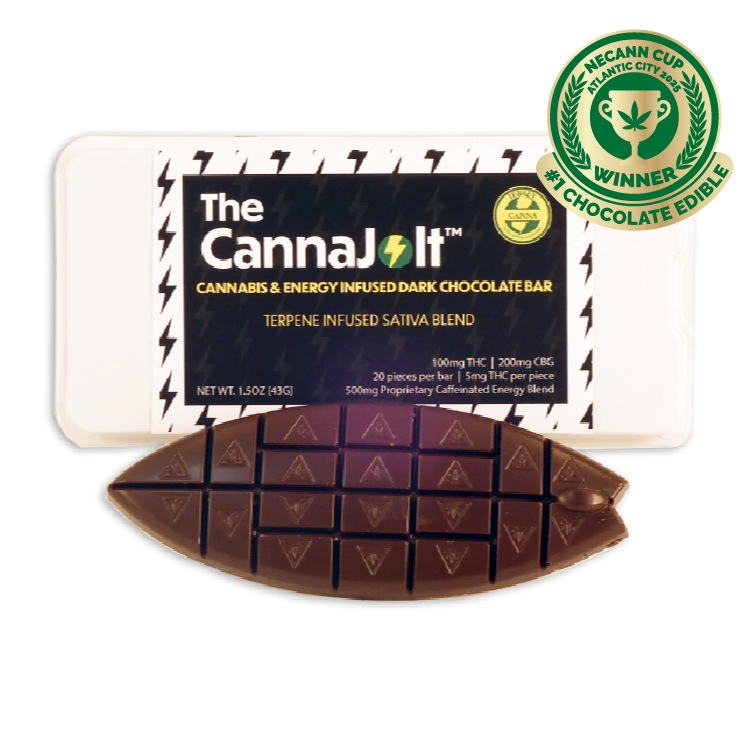
That creates a product concept that is very different from a traditional chocolate edible built primarily around flavor and THC.
The key distinction is formulation. Cannabis becomes one component within a more complex food product.
From Traditional Edibles to Functional Formulations
The evolution can be understood by comparing several approaches.
| Edible Approach | Main Formulation Focus | Example |
| Traditional THC Edible | Cannabis + familiar food format | Cannabis chocolate bar |
| Cannabinoid Combination | Multiple cannabinoids or defined ratios | THC + CBD CannaDiscs |
| Functional Edible | Cannabinoids + selected functional ingredients | CannaJolt™ |
| Microdose Format | Smaller, clearly defined THC portions | Jersey Canna microdose products |
| Extract-Focused Edible | Specific cannabis extract becomes part of the product identity | Live rosin chocolate |
None of these categories is automatically better than another.
Instead, they show how weed edibles are becoming increasingly segmented according to formulation, serving design, ingredients, and intended product concept.
Microdosing Adds Another Layer to Weed Edibles
Innovation is also happening through serving architecture.
Jersey Canna maintains a dedicated microdose cannabis collection focused on lower and more controlled cannabinoid portions.
For example, the 21 Counties Bar uses 21 segments containing approximately 4.75mg THC each. Other Jersey Canna formats use 5mg pieces that can be divided further into 2.5mg portions.
This shows that innovation does not always mean adding more THC.
Sometimes, product development moves in the opposite direction: smaller portions, clearer segmentation, and greater flexibility.
That distinction matters in New Jersey because state regulations limit an individual ingestible cannabis serving to no more than 10mg of active THC.
Why Ingredient Lists Matter More in Modern Edibles
As formulations become more complex, consumers have more information to consider.
The cannabinoid label remains important, but so does the complete ingredient list.
A functional edible may contain caffeine, vitamins, botanicals, chocolate, CBD, CBG, or other components in addition to THC. Consumers with sensitivities, dietary restrictions, medication considerations, or caffeine concerns should review those ingredients carefully.
This is particularly important because marketing language should not replace informed decision-making.
Products containing added ingredients may be designed around concepts such as energy, relaxation, or sensory experiences, but individual responses can vary. Consumers should avoid treating those concepts as guaranteed medical outcomes.
Responsible Use Still Applies to Every Formula
More sophisticated formulations do not change the basic principles of responsible cannabis consumption.
The New Jersey Cannabis Regulatory Commission recommends starting with a low amount of THC and waiting for the full effect before consuming more. Edibles may take an hour or two to produce noticeable effects and can last longer than inhaled cannabis.
Consumers should also read labels carefully. New Jersey requires legal cannabis products to display THC information, and regulated products are subject to packaging and labeling requirements.
Cannabis products should remain in child-resistant packaging and be stored securely away from children and pets.
The Future of Weed Edibles Is About Formulation
The next generation of weed edibles is unlikely to be defined simply by increasing THC potency.
Instead, product development is becoming more sophisticated.
Cannabinoid ratios can change. Extracts can change. Serving sizes can become smaller. Ingredients can become more specialized. Chocolate, beverages, cubes, discs, and other formats can each provide a different product architecture.
For brands such as Jersey Canna, this creates room to develop edibles around culinary quality, cannabinoid formulation, portion design, and functional concepts rather than relying on THC concentration alone.
For consumers, the takeaway is equally important: look at the whole formula, not just the THC number.
Explore Jersey Canna to discover its range of cannabis chocolates, functional edibles, cannabinoid combinations, and microdose formats available for adults 21 and older in New Jersey.